Angles
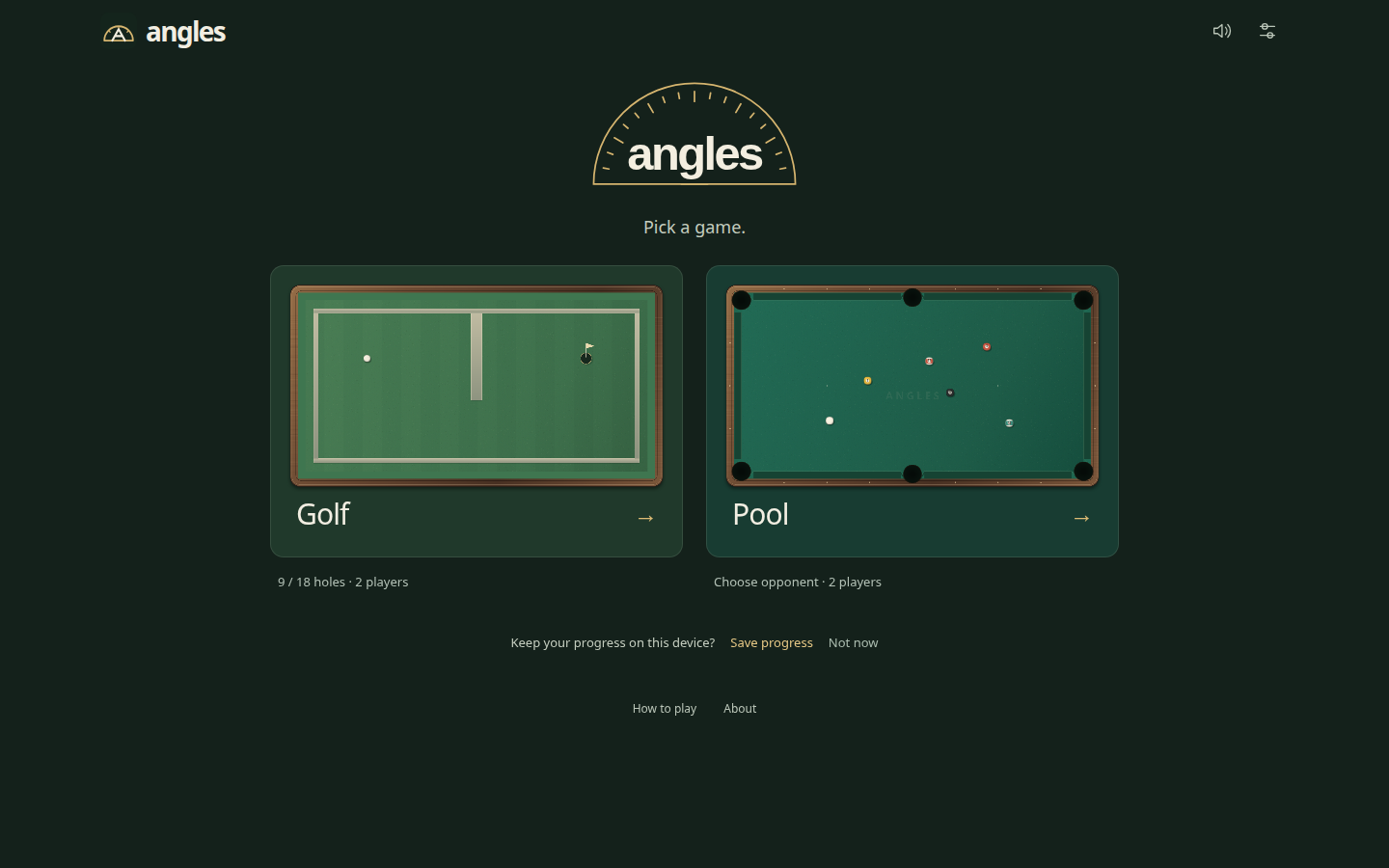
Minigolf and pool with the table doing most of the talking. Forty hole layouts, nine- or eighteen-hole rounds, and twenty-four computer opponents. Point, shoot, and play in your browser.
Version: 1.0
Type: Physics Simulation / Single Page Application (SPA)
Domain: Games / Minigolf / Pool
Purpose & Origins
Angles started with wanting to play Jippii Golf and Pool again. Not rebuild the surrounding portal, restore a chat lobby, or spend an evening persuading an old runtime to cooperate. Just recover the part I remembered: a small game in a browser, a ball, a wall, and a shot that looked easier before I took it.
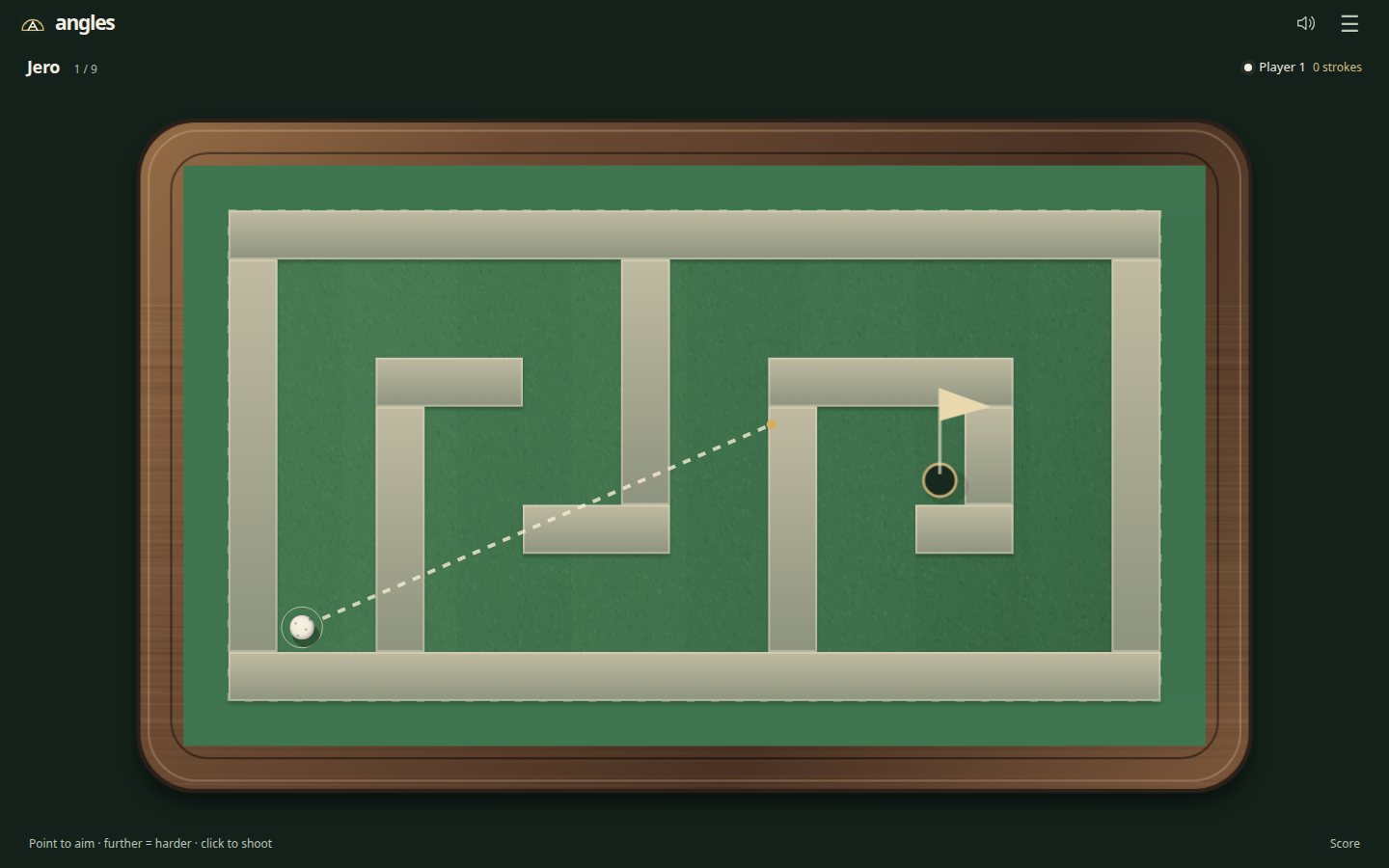
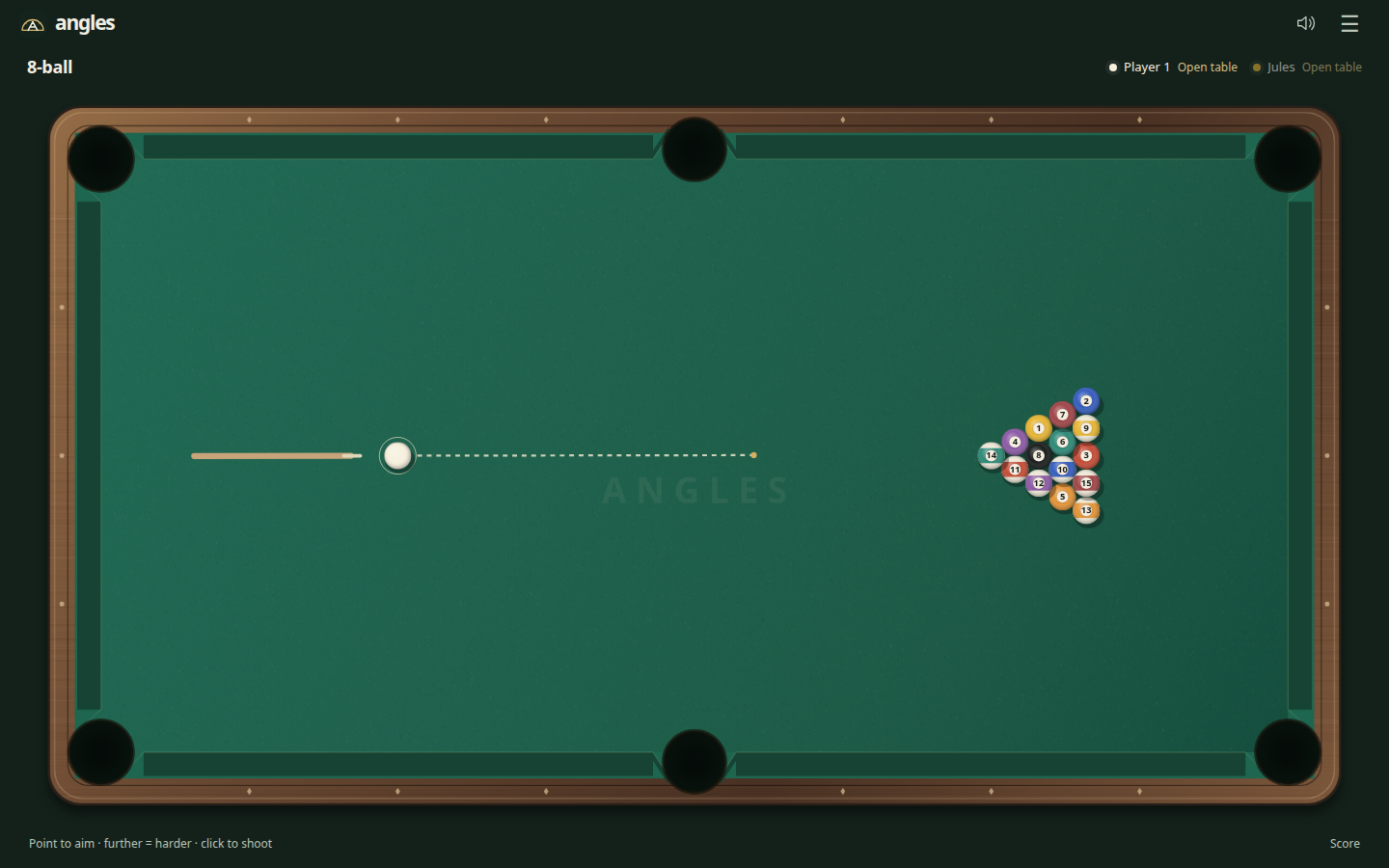
The first versions were far too complicated. Angle fields, power sliders, a separate Shoot button, confirmations between turns. Those went away. With a mouse, point and click; farther from the ball means more power. On touch, drag and release. Turns and holes advance by themselves. The table is the interface. The rest belongs out of the way.
Architecture & Technology
Angles is written in TypeScript, with native browser controls and Canvas 2D rendering. Rules, shot simulation, and presentation are separate; computer shot planning runs in a Web Worker. The application compiles into a self-contained HTML gameplay entry, with a small set of local files for icons, optional materials, offline support, and recovery. There is no gameplay server, runtime CDN, account system, or analytics layer.
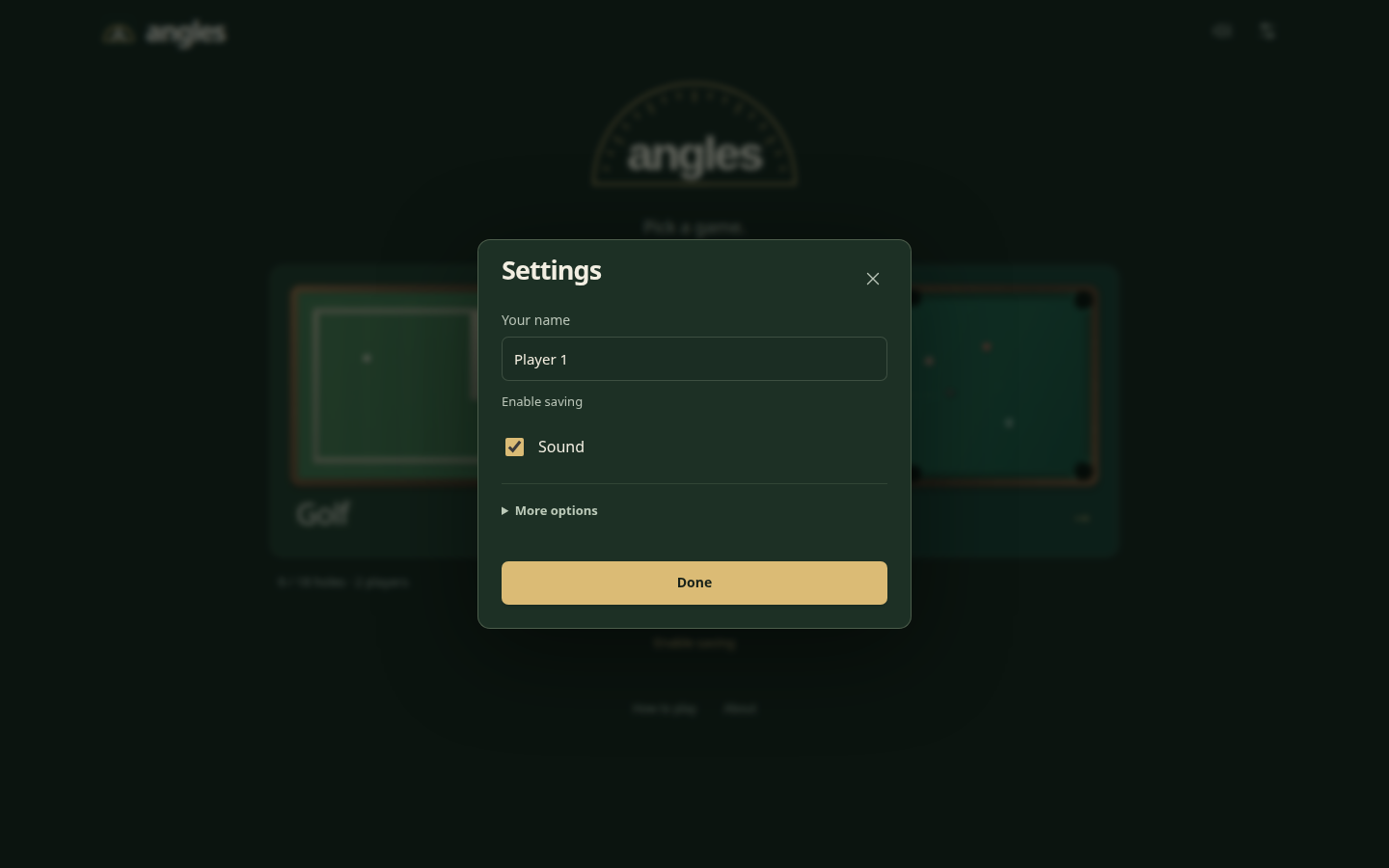
Saving is optional. Accepted shots, progress, and records use IndexedDB; small local preferences use localStorage, and backups can be exported. Saved games retain their selected course order and gameplay version rather than inheriting different physics after an update. Offline preparation stays separate from playing: opening the game does not require installing it first.
Scope & Uniqueness
Golf draws nine- or eighteen-hole rounds from forty layouts without repeating a hole within a generated round. There are gates, doglegs, islands, sand, fast surfaces, and holes with alternative cups. Pool has eight-ball and nine-ball, with twenty-four opponents split across Easy, Average, and Pro. Their styles change shot selection, break strength, risk, and accuracy, not the size of their pockets. Both games support two people sharing a device, with separate Practice tools for experimenting.
This is a reconstruction and expansion, not a claim to have recovered the entire original catalogue. Seven layouts are provisional historical reconstructions, three are calibration courses, and thirty are new Angles Club designs. Turf, felt, warm wood, and a protractor mark give it a cleaner presentation without turning it into a different kind of game. There are no unlock currencies, advertising breaks, or matchmaking queues. The intended complication is deciding whether the bank shot is a good idea.
Screenshots