Garden Quest
A garden that grows dragons. Arrange plants across a floating island, keep or hatch the eggs they produce, and discover a hidden clearing where your companions play together. Nothing dies, and grumpy dragons are not a problem to fix.
Open Garden Quest · All projects
Type: 3D Gardening and Creature-Collection Sandbox / Single Page Application (SPA)
Domain: Creative Gardening / Procedural Creatures / Exploration
Purpose & Origins
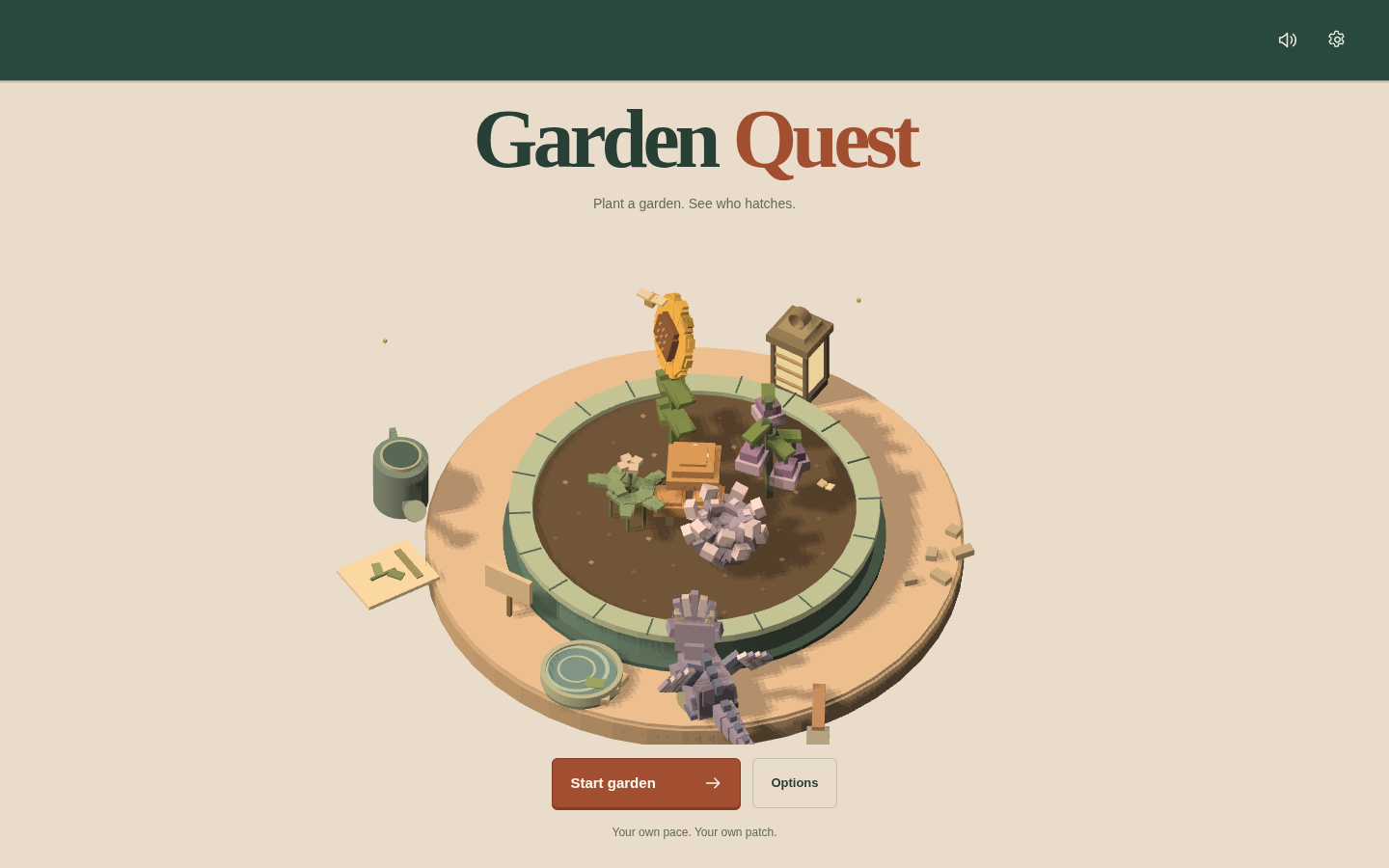
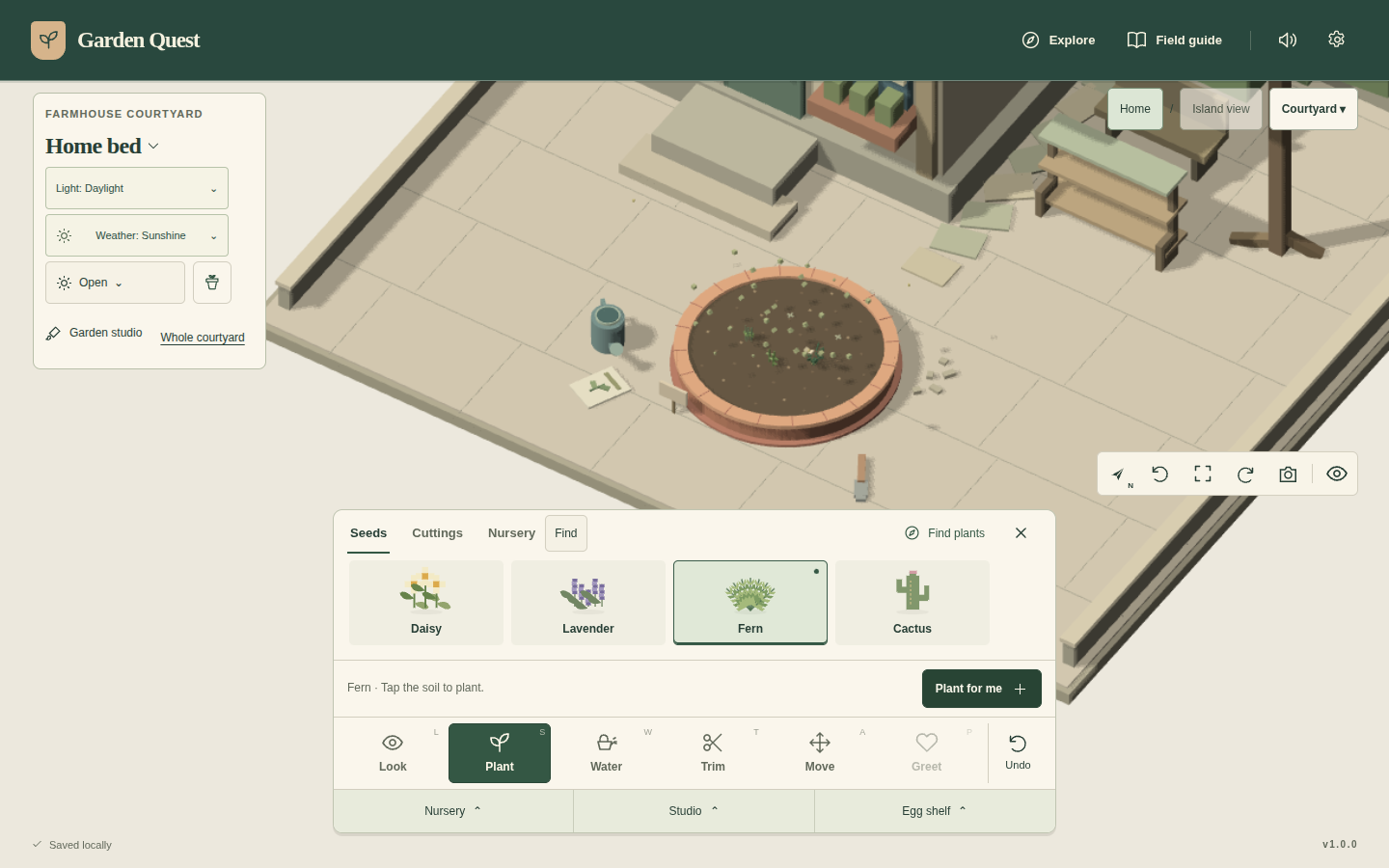
Garden Quest begins with a small farmhouse garden. Plant seeds, take cuttings, shape what grows, and follow botanical paths into the surrounding island. The plants and conditions in each growing area influence the eggs that appear. Hatch one to meet a companion, or keep it on a shelf until you feel like finding out what is inside.
The original idea was a single pot that could produce something unexpected: not just another flower, but a dragon shaped by the garden around it. It grew into a world for arranging plants and getting to know the creatures that come from them, without turning either activity into a maintenance schedule.
Watering, sunshine, shelter, and rain matter, but absence is not punished. Plants do not die, companions do not develop hunger or happiness debts, and a finished arrangement can stay finished. The point is to make somewhere you enjoy returning to, not somewhere that needs checking on.
Architecture & Technology
The application uses HTML, CSS, and JavaScript, with a custom WebGL 2 renderer drawing into an HTML canvas. Fixed-step garden simulation and companion behavior are separated from rendering. Seeded generation combines local garden influences with individual variation; a dragon’s identity is established when its egg forms, not recalculated every time the player changes the planting.
Plants, articulated dragons, terrain, and effects are constructed locally from authored voxel-style forms. Instanced geometry, cached plant models, specialized lighting paths, and adjustable rendering quality reduce repeated graphics work. Only the selected habitat needs full detail; the island overview uses simpler representations of the same gardens and individuals.
Music, ambience, interaction sounds, and dragon voices are synthesized through the Web Audio API, with independent volume controls. The interface supports mouse, touch, and keyboard interaction, with reduced-motion options and an ambient viewing mode.
The complete release is one self-contained HTML file, with no external runtime libraries, asset downloads, account system, analytics, or application backend. Gardens are saved locally using IndexedDB with localStorage fallback and recovery handling. JSON export and import provide portable backups and transfer between browsers. The author describes a separate modular source package that includes the build scripts, tests, and release-verification tools.
Scope & Uniqueness
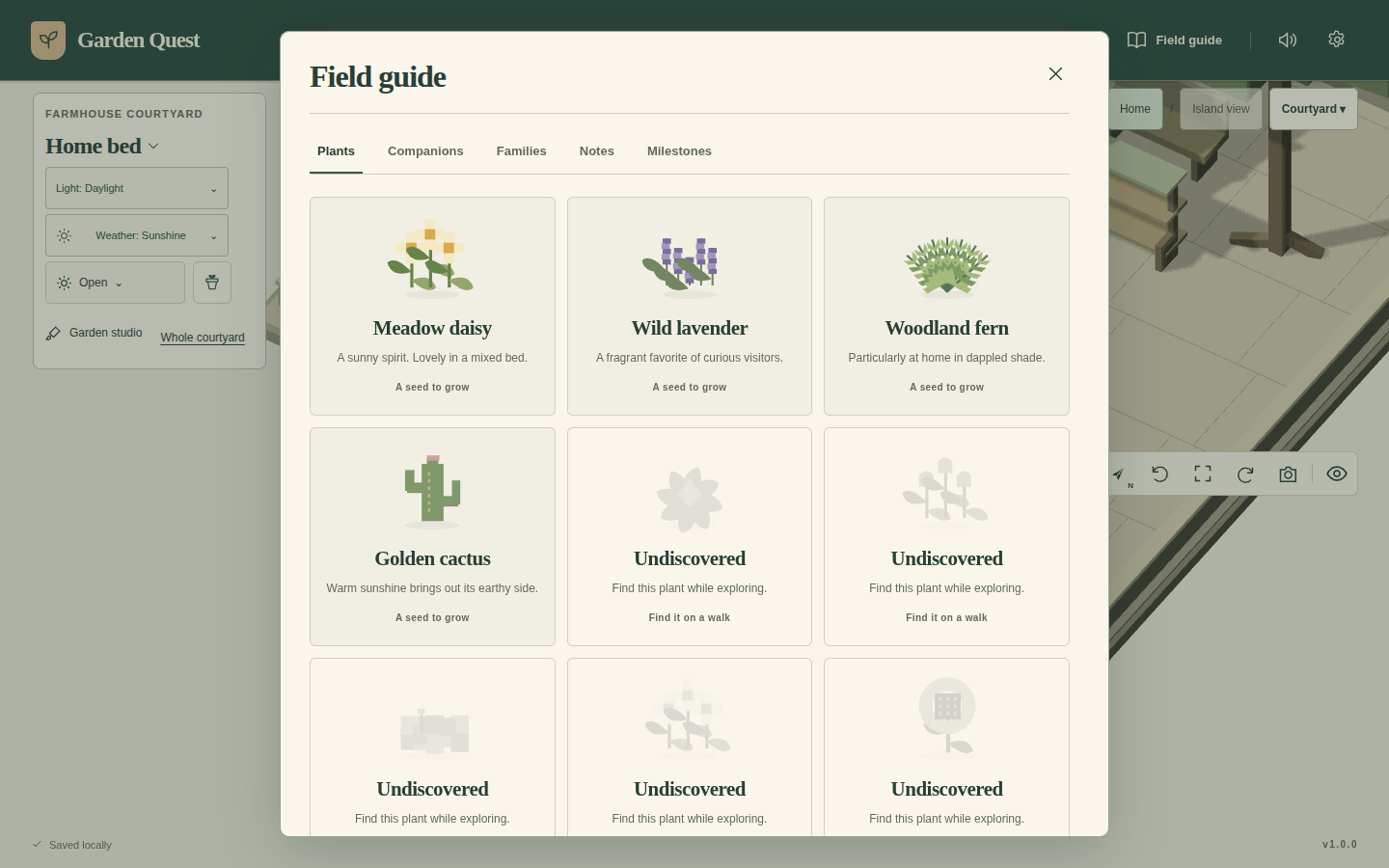
Version 1.0 includes 36 garden species, 24 dragon families, five articulated body plans, eight temperaments, and twelve exterior landscaping types. Compact dragons, Greatwings, Longtails, Wyverns, and Ground Drakes have different proportions and movement: a heavy wingless companion belongs here just as much as a slender flying one.
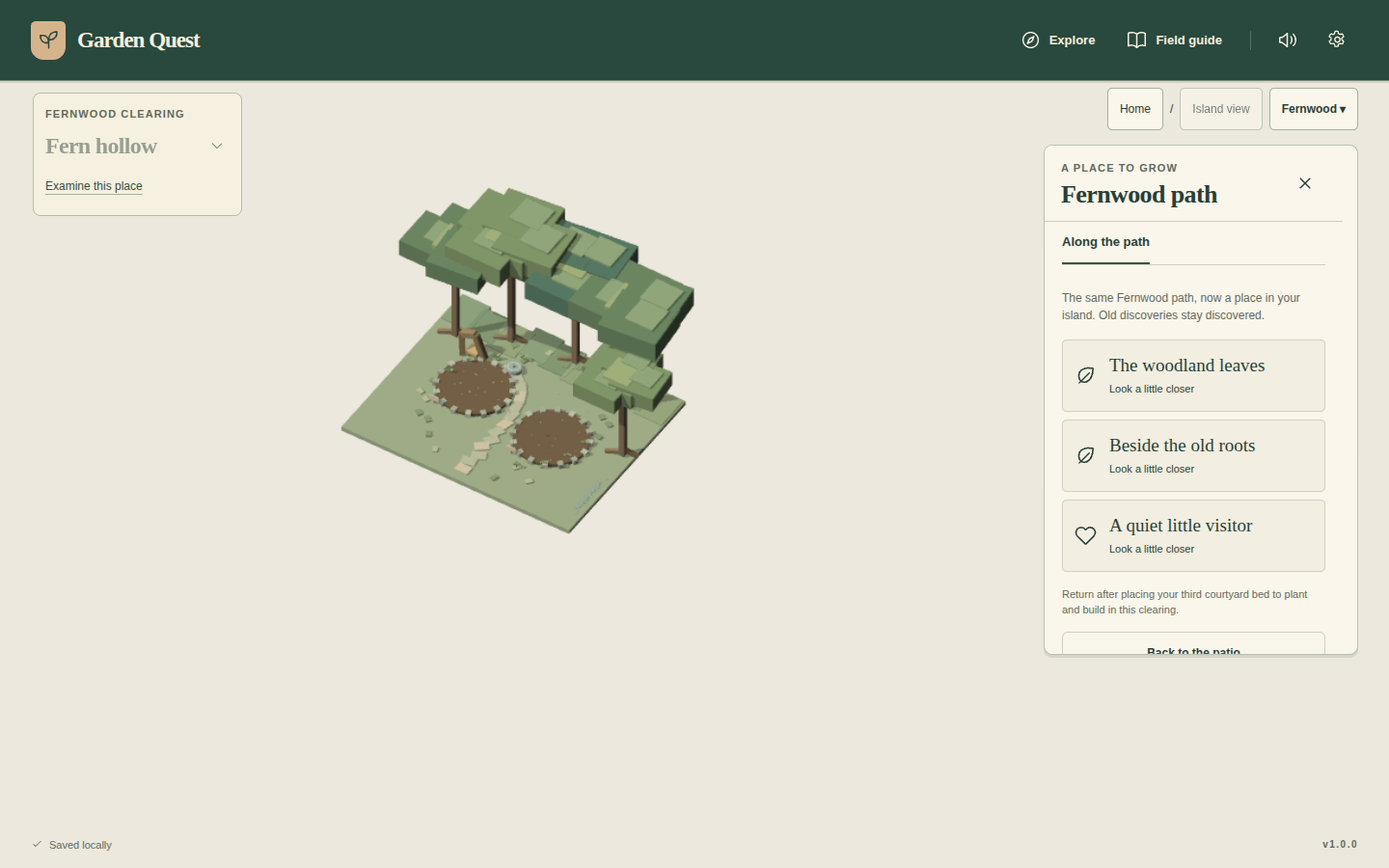
Six gardening habitats surround the island’s concealed centre: the Courtyard, Fernwood, Willow Brook, Mountain Terraces, Amber Hollow, and Butterfly Meadow. They offer different relationships to explore, including shallow-water planting, windbreak shelter, movable pools of cave light, and flower arrangements that guide a visiting butterfly or moth.
Examining the outer regions reveals the Heartgarden, a place of pure play. Your active companions gather automatically and choose among five shared activities, including passing a starseed, following a firefly, and taking turns at hide-and-peek. There is no Start-event button, party to staff, or prize to collect. Personality changes how a dragon joins in, not whether it is welcome.
The connection between gardening and companionship is the core of the game. Changing an arrangement can influence the next egg, but it does not rewrite a dragon you already know. Nursery storage, optional hatching, display gardens, and saved portraits let the player preserve things rather than continually replace them. There are no ads, microtransactions, daily streaks, or upkeep meters. The garden can be an experiment, a collection, or simply a pleasant place to sit.
Screenshots