Throttle and Chain
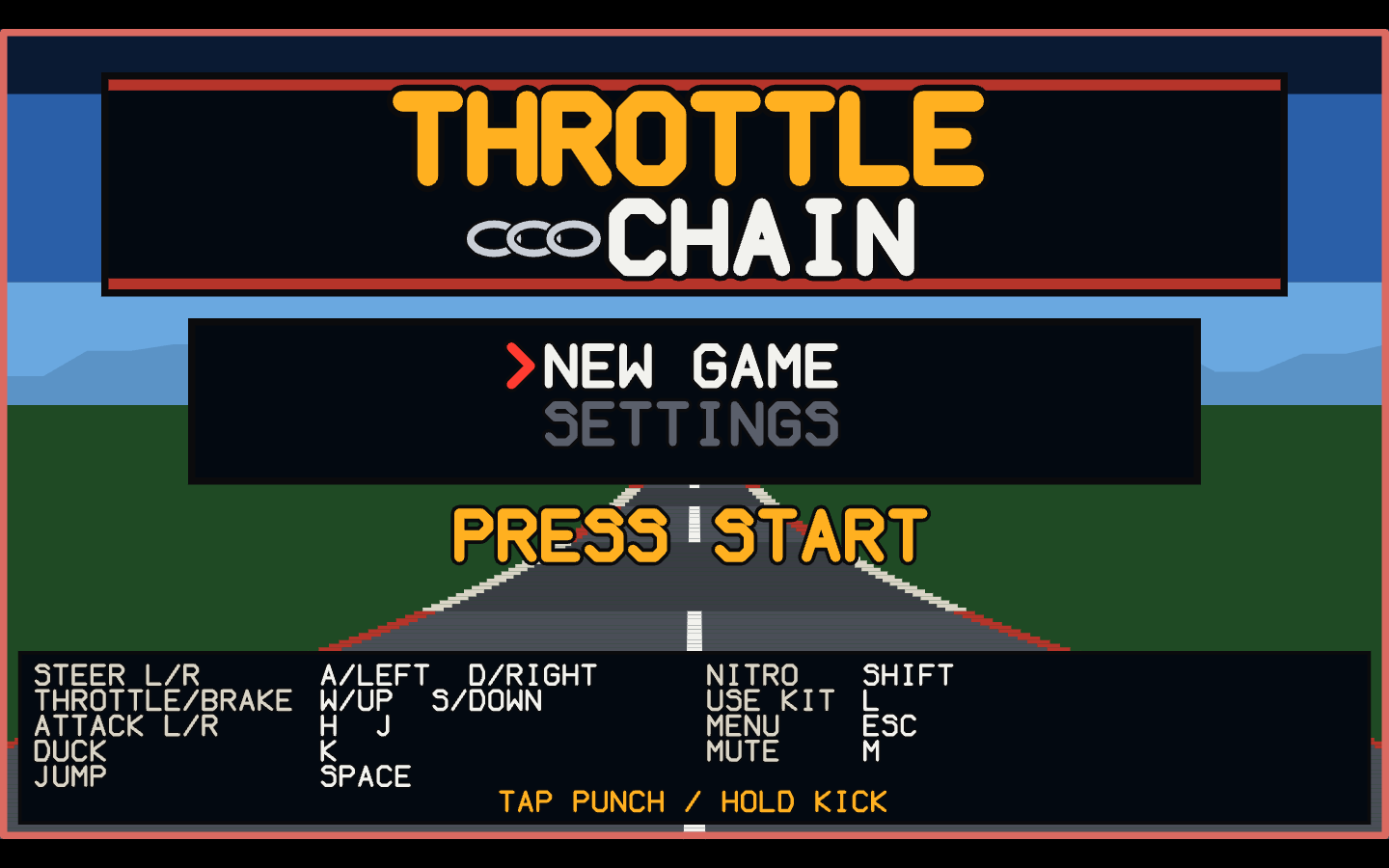
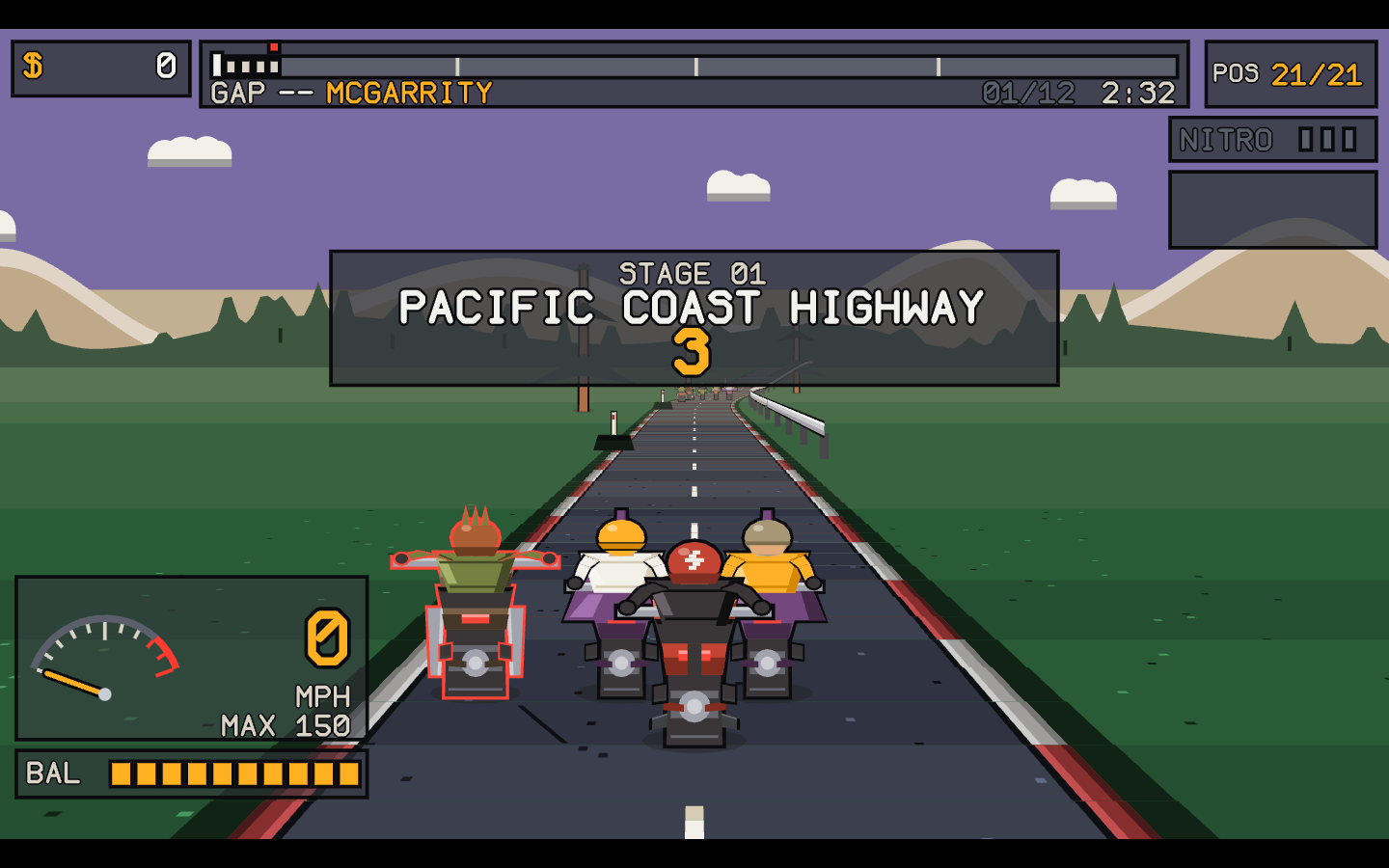
Throttle and Chain, a pseudo-3D motorcycle combat racer where traffic, rival riders, hazards, and a countdown all compete for the road.
Open Throttle and Chain · All projects
Version: 3.2.1
Type: Pseudo-3D Motorcycle Combat Racer / Single Page Application (SPA)
Domain: Arcade Racing / Vehicular Combat
Purpose & Origins
Throttle and Chain (TAC) is a motorcycle race you can fight your way through. Weave through traffic, trade blows with rival riders, and keep the bike upright long enough to reach the finish before the clock runs out.
The design takes its cues from Road Rash and Cruis'n USA, combining high-speed racing, exaggerated wipeouts, and roadside spectacle with a longer campaign of upgrades and recurring opponents. The emphasis is on arcade handling and close encounters rather than realistic motorcycle simulation.
Between races, roadhouses provide a place to meet other riders, visit the chop shop, and recruit a crew. Contracts, wagers, and smuggling jobs give the next race an additional objective: knock down a named opponent, back your own performance, or deliver a package without wiping out.
Architecture & Technology
The application uses HTML, CSS, and JavaScript, built from modular TypeScript. A custom Canvas 2D renderer creates a pseudo-3D world through projected road segments, scaled riders, and layered parallax scenery rather than a WebGL scene. A fixed 60 Hz simulation handles movement, combat, and collisions separately from the rendering cadence.
Roads and scenery are generated on the player's device, while vehicles and interface elements are drawn from code-defined shapes. Rider portraits use locally supplied image cards and compact crops. The presentation uses a 384 × 224 logical frame, but draws at device resolution rather than enlarging a low-resolution image. Even the lettering is constructed from strokes, preserving the retro visual style without relying on downloaded fonts.
Sound is synthesized locally through the Web Audio API. Twelve environment-specific musical themes and a separate roadhouse theme are defined as note and rhythm data, with sequencing scheduled against the audio clock rather than the frame rate. Engine pitch and load, impacts, weather, and nearby action have their own synthesized feedback; no prerecorded soundtrack or sound samples are required.
The supplied release is one self-contained HTML file, including its JavaScript, game data and local portrait artwork. It has no application backend, account system, or external runtime library. Campaign progress, best times, bike tuning, equipment, crew, faction standings, paint choices, and relationship history are saved in browser localStorage. Progress stays with that browser profile rather than a cloud account.
Scope & Uniqueness
TAC includes 12 stages spanning coastal highways, desert roads, mountain passes, snowy summits, bayou causeways, and industrial expressways. Conditions affect more than appearance: rain and ice reduce grip, different surfaces change acceleration and shoulder behaviour, and night stages bring the road into the headlamp's reach.
A roster of 64 named riders supplies a 40-rider campaign cast, with 20–30 opponents fielded per race. Riders have individual racing tendencies, authored personalities, and dialogue, while recorded meetings, results, and knockdowns give later encounters a history. The people at the roadhouse are more than names on a results screen.
It is also a place to improvise. Hop over a hazard, land on a car roof, or hire up to two wingmen to provide a slipstream, shove rivals aside, and cover your flank. New Game+ returns to the opening road with the bike, treasury, upgrades, and best times retained. The aim is competitive, chaotic play: ride clean when it matters, and make trouble when an opening presents itself.
Screenshots