unfathom (preview)
Screenshot preview of a descent you take screen by screen through 127 generated biomes. Version 0.3, a beta prerelease: fight, forge, take a covenant, and let the Register write down what stopped you.
Type: 2D Action-RPG / Roguelite Single Page Application (SPA)
Domain: Dungeon Exploration / Procedural Worlds
This is a screenshot preview of version 0.3. The game is not available to play on this site.
Purpose & Origins
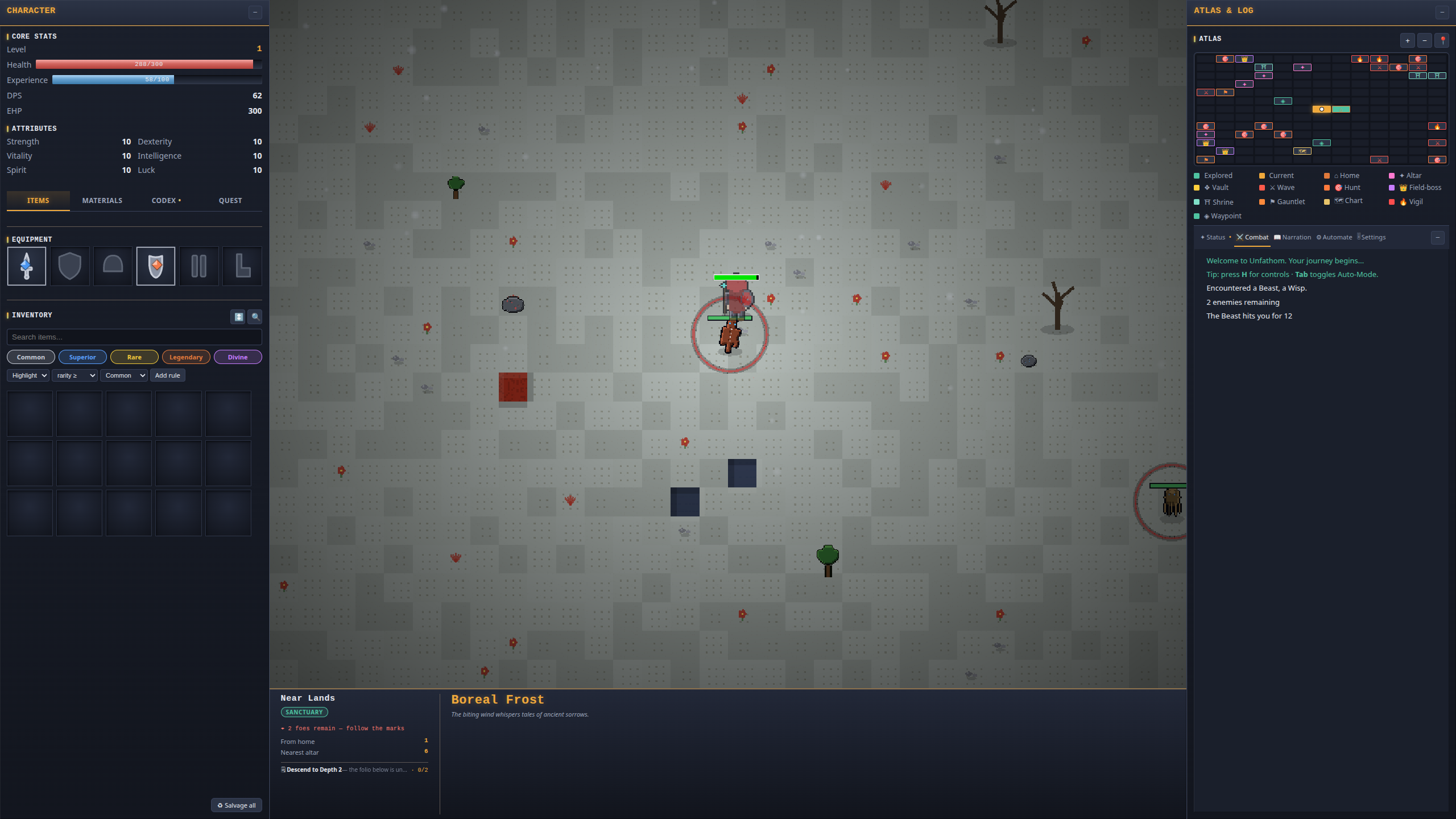
unfathom is a place you descend into. Explore screen by screen through hostile ground, fight what lives there, forge what you find, and let the site's Register record what you uncovered before it took you.
The project began as a solo attempt to marry two feelings: the single-screen room-to-room exploration of the 16-bit action-RPGs and the weighty, readable impact of a modern action roguelite. It grew into a sandbox for pushing how far a game can go on generated content alone, and for finding out whether a world nobody authored can still feel like a place.
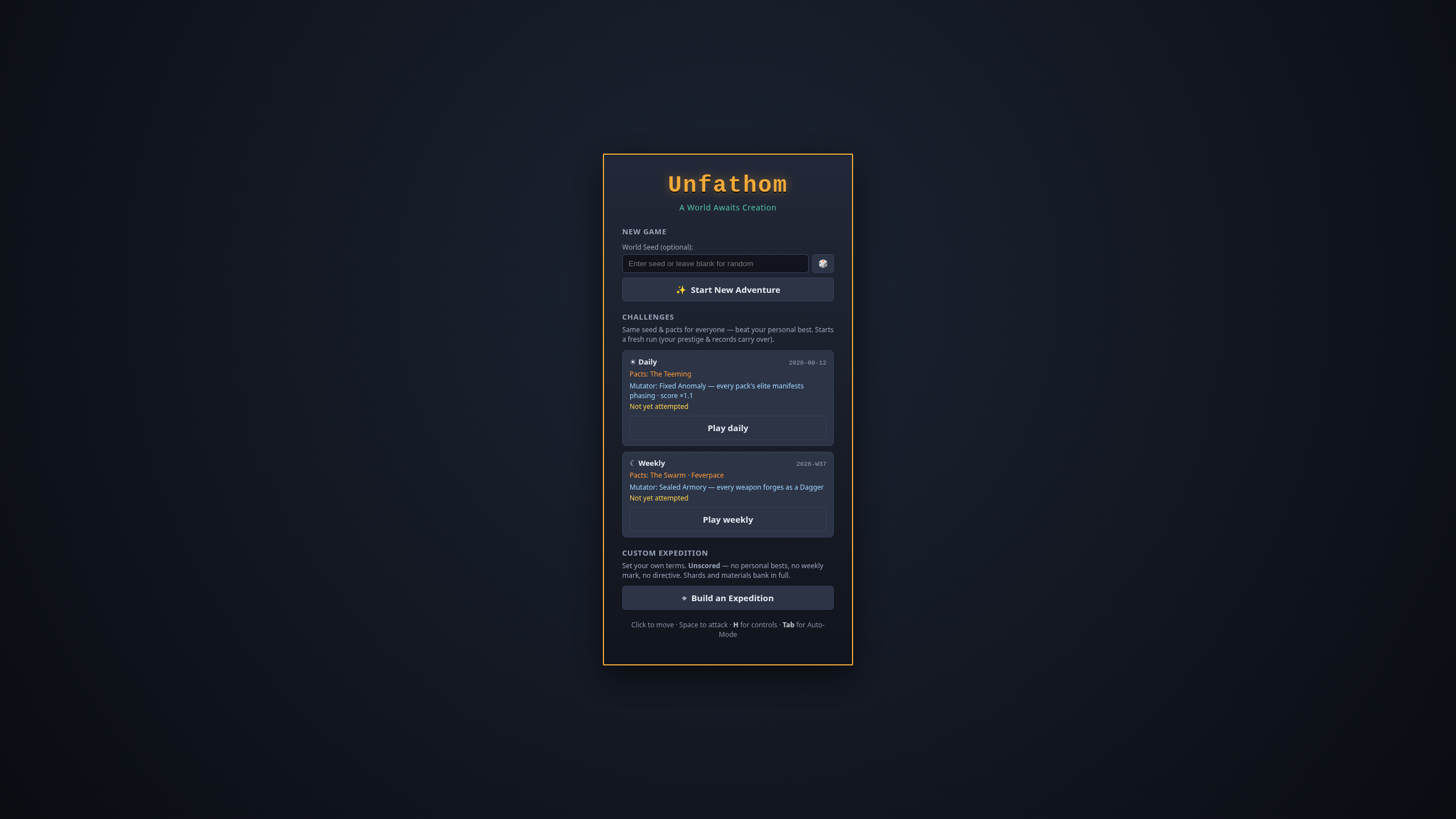
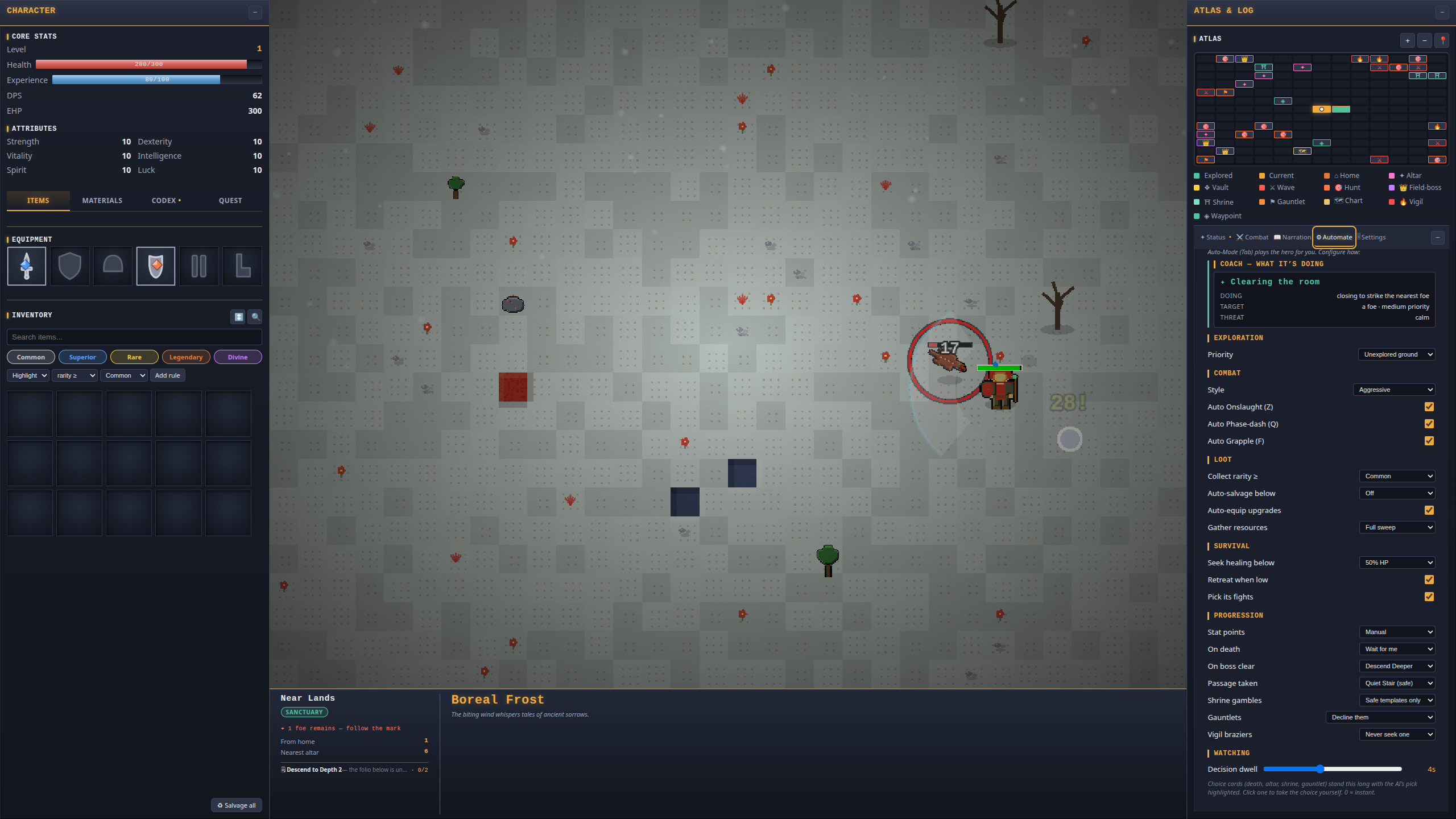
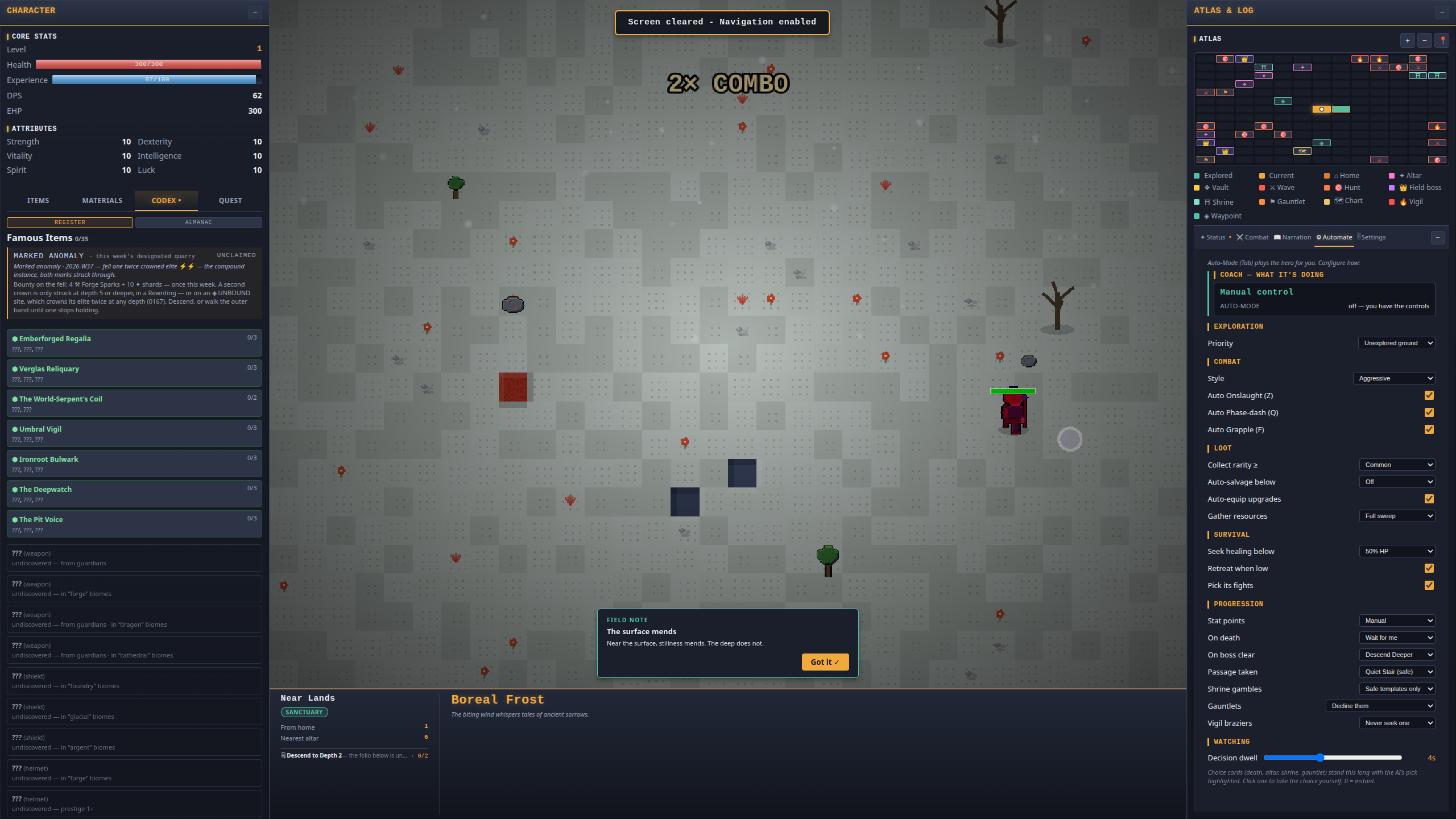
Players can steer themselves or hand the hero to Auto Mode, which explores, fights, loots, and makes the site's choices on its own. Guardians, covenants, hunts, daily marks, and a prestige-versus-continue descent give the run direction without gating any of the ground.
Architecture & Technology
The application uses TypeScript, HTML and CSS, with Phaser rendering through WebGL into an HTML canvas. Zustand holds the game state, and every gameplay decision draws from seeded random streams rather than the browser's own, so a given seed reproduces the same world, loot and encounters on any device.
Terrain, room layouts, enemies, items and visual art are constructed procedurally on the player's device. Screens generate in a Web Worker with a synchronous main-thread fallback, and the worker and main thread are held to identical output. A hierarchical seed tree derives each biome, screen and item from a single master seed.
Sound is generated entirely through the Web Audio API. Every biome owns a composed loop with its own melody, instruments, harmony and rhythmic character, built from a small musical grammar and rendered offline into a buffer, and the music thickens and darkens as fights escalate. Combat effects are synthesized per event and per weapon shape. Music and effects have independent volume controls, with captions available for the deaf and hard of hearing.
The release is a static bundle deployable from any file host. It requires no application backend or account system. The previewed release bundles Phaser locally and generates its visual and audio assets on the player's device. Runs, durable progress, records and preferences are saved in browser localStorage, so progress belongs to that browser profile, with export and import available for backups and transfer.
Scope & Uniqueness
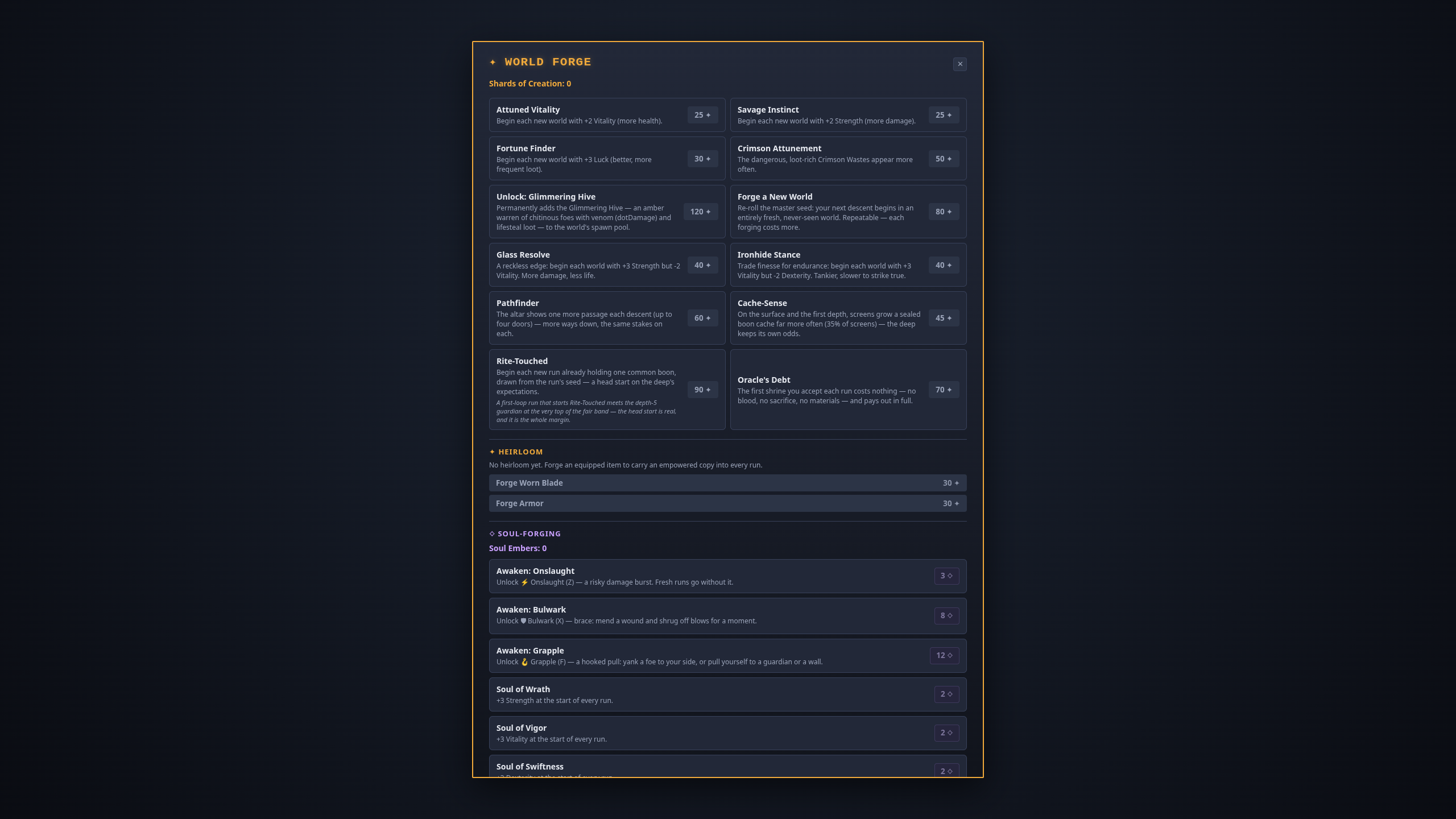
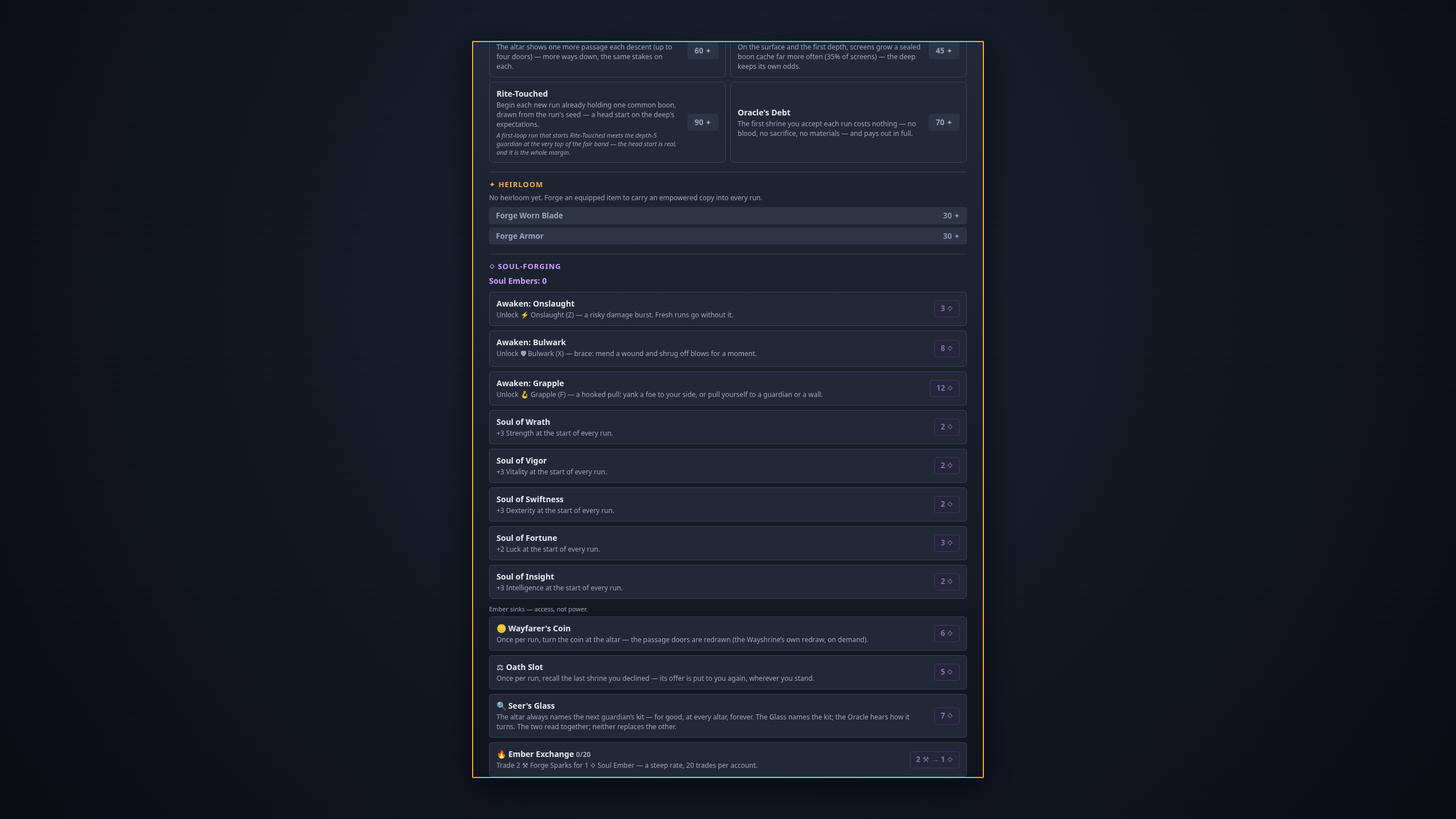
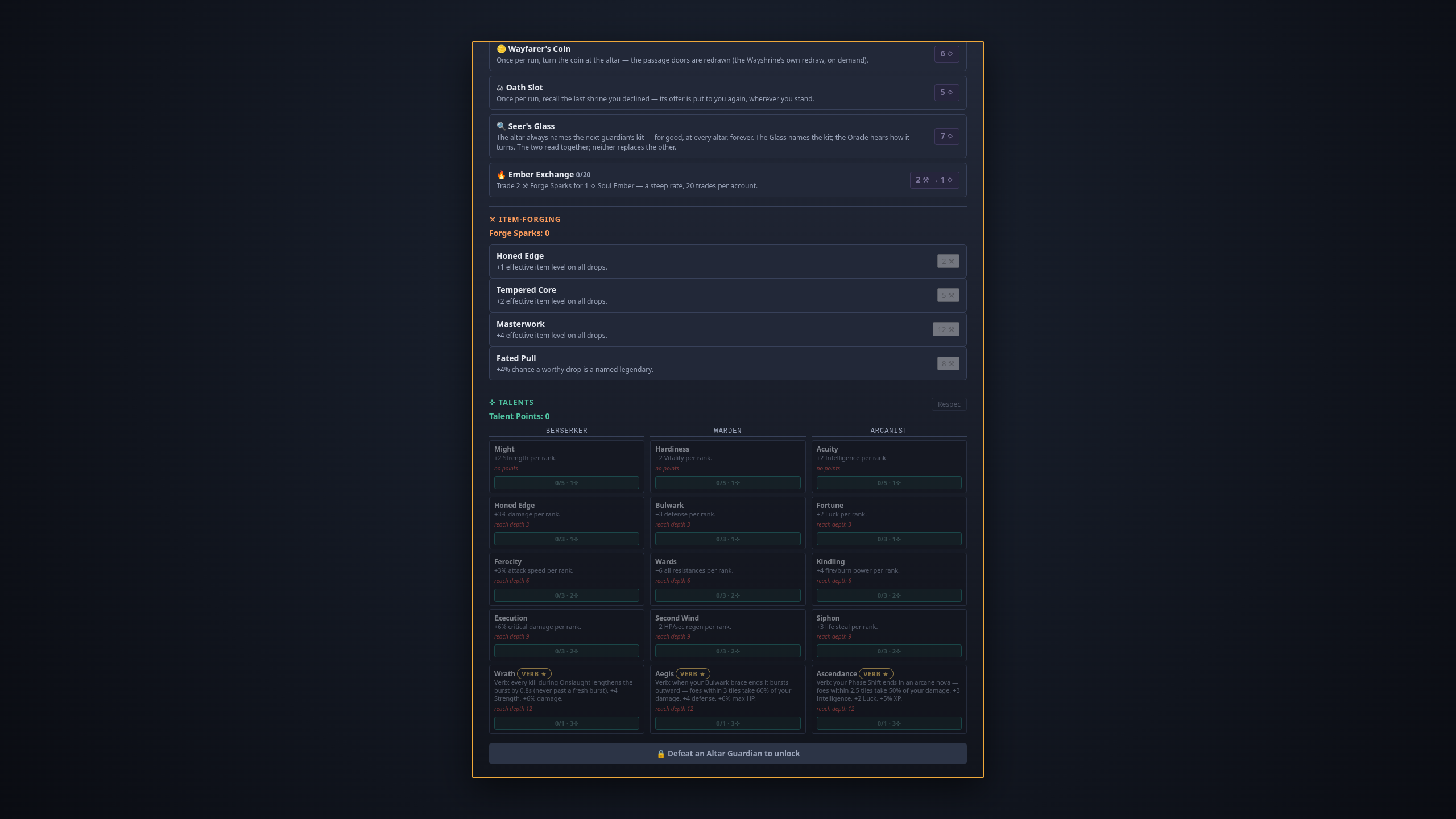
unfathom includes 127 biomes across six families, spanning hollow wastes, ruined constructs, burrowed warrens, sealed reliquaries, ember shelves and crowned depths, each with its own hazards, ambient curses, resources and music. Ten weapon shapes, named items with authored effects, set bonuses, crafting, a branching talent tree, and a New Game Plus that expects a forged build keep repeated descents distinct.
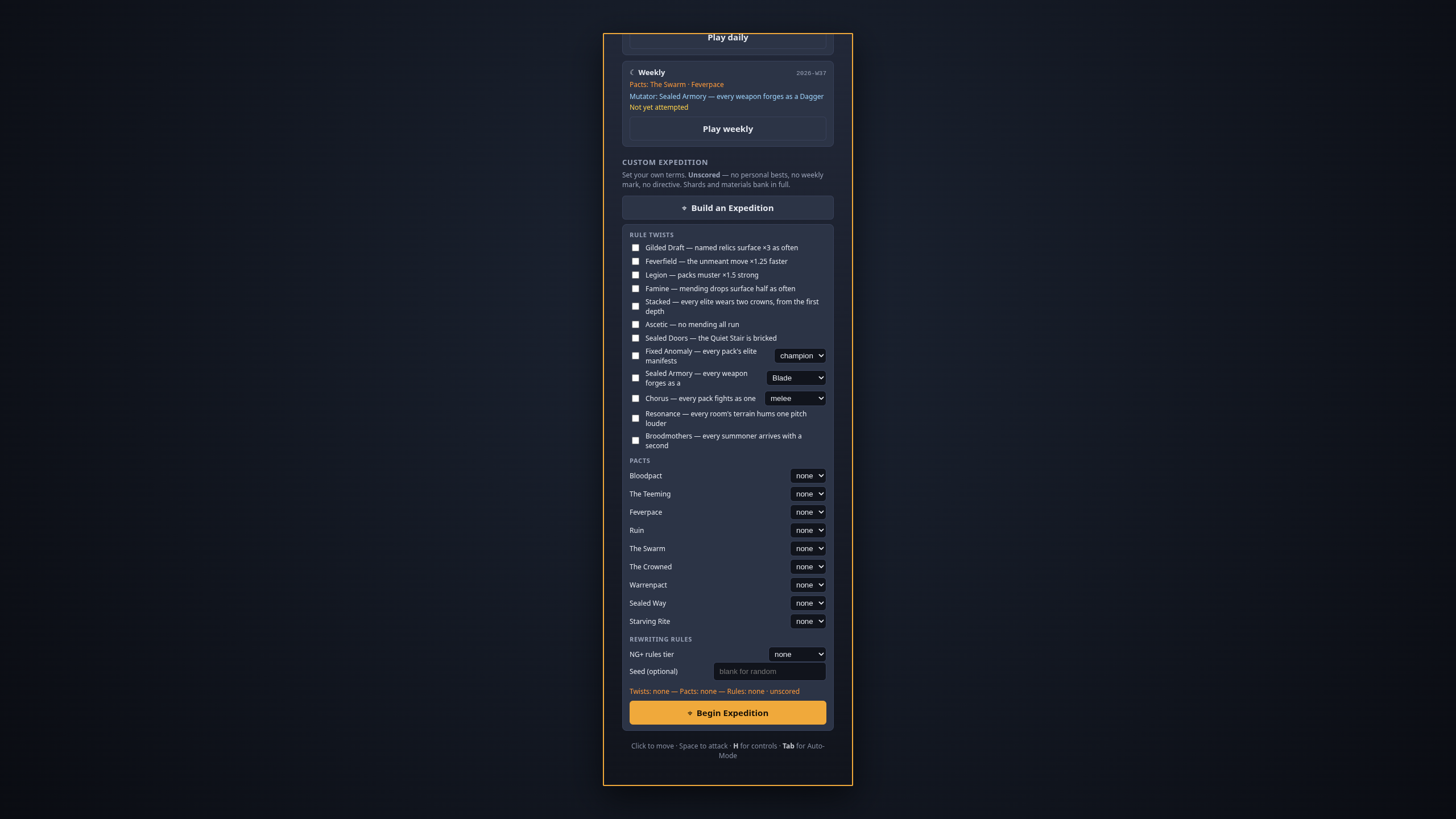
It is also a place to experiment. Accept a shrine's bargain, take a covenant that changes the rules of a run, or let Auto Mode run an expedition while you watch, then read the field report it leaves behind. The site's danger is one thing everywhere: what a place looks like, how it fights, and how the Register writes about it all follow from its containment class.
The aim is atmosphere and combat feel rather than authored story. Sprite scale, screen ratio and hit response are tuned to a specific standard of smooth movement and hard impact, validated by playing rather than by reading code. There are no advertisements, microtransactions, subscriptions or artificial waiting mechanics: the descent goes as deep as you can take it.
Screenshots